Microbiology expert advocates eco-friendly nanotechnology to boost food security, health
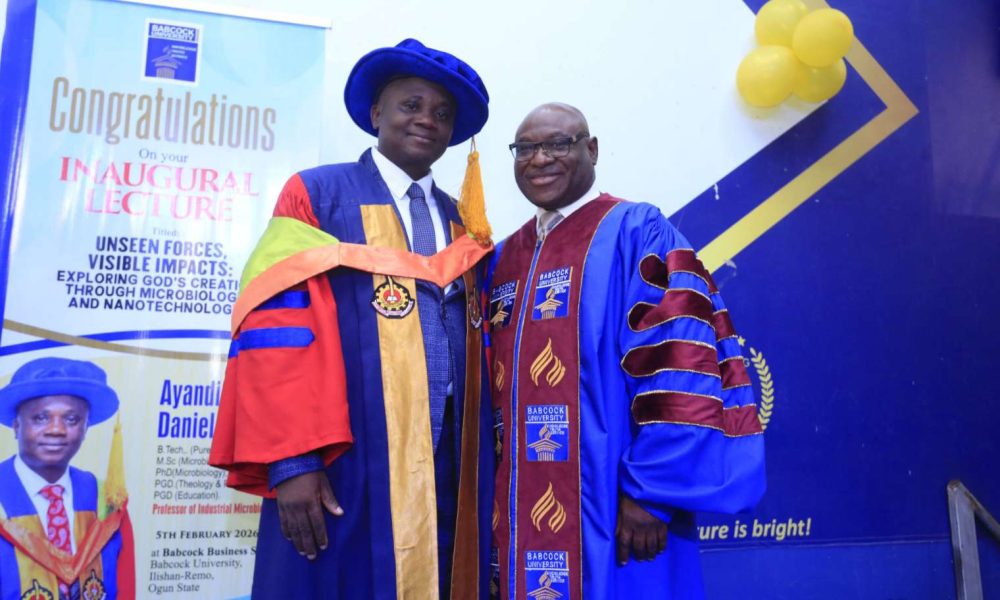
Amid growing global concern over food security, public health and environmental pollution, a Professor of Microbiology, Ayandiran Daniel Aina, has called for a more eco-friendly approach to developing agricultural pesticides, improving crop yields and advancing cancer treatment.
Prof. Aina made the call during Babcock University’s 58th inaugural lecture titled, “Unseen Forces, Visible Impacts: Exploring God’s Creation through Microbiology and Nanotechnology,” held at the institution’s main campus in Ilishan-Remo, Ogun State.
He advocated the use of plant and fungal metabolites for the green synthesis of nanoparticles in agriculture, medicine and environmental pollution control, describing the approach as a sustainable alternative to conventional methods that often leave harmful, long-term residues in the soil and pose risks to human health.
“While silver nanoparticles and other nanomaterials have shown great promise in medical applications, concerns about their long-term effects on human health remain,” Prof. Aina said. “Research must continue to understand how these materials interact over time.”
He urged researchers to collaborate with industrial partners to streamline production processes and called for clear regulations to ensure the safe and ethical use of nanomaterials. He also stressed the need to prioritise toxicity testing and biocompatibility assessments before such materials are deployed for medical purposes.
Prof. Aina highlighted the potential of nanoparticles in pollution control, particularly in managing oil spills, and encouraged their application in pesticide production to improve crop yield and resilience.
“Nanotechnology-based solutions are practical and cost-effective,” he noted. “However, as with all emerging technologies, integrating ethical guidelines and bio-safety protocols into research, development and application is critical, especially in medical use, to ensure they do not cause adverse effects in patients.”
He further drew attention to the prospects of nanobiotechnology in cancer treatment, suggesting that targeted nanoparticle therapies could offer alternatives to chemotherapy, which often damages healthy cells alongside cancerous ones.
Against this backdrop, Prof. Aina emphasised the importance of cross-disciplinary research and educational programmes that teach the intersection of microbiology and nanotechnology to the next generation of scientists and engineers.
“As we continue to redefine our understanding of nanomaterials and their applications in bioremediation, medicine, agriculture and drug delivery, we are not only advancing scientific knowledge but also contributing to a better world,” he said. “Though these forces are invisible to the naked eye, they are deeply rooted in God’s creation.”