In a groundbreaking advancement at the intersection of biology and electronics, researchers at Penn State University have developed an innovative memory device that harnesses the exceptional storage capabilities of synthetic DNA integrated with quasi-two-dimensional perovskite semiconductors. This biohybrid approach promises to revolutionize low-power memory technology, offering an ultra-efficient pathway for future electronics, artificial intelligence, and
In the realm of microbiology and nanoscience, a fascinating group of bacteria stands out for its extraordinary navigational capabilities. These tiny organisms possess an internal biological compass, formed by chains of magnetic nanoparticles, enabling them to orient themselves with remarkable precision using the Earth’s magnetic field. Recently, a research team from the University of Basel,
Almost a century ago, magnetic lenses were first incorporated into an electron microscope(1). Since then, electron microscopy has advanced from barely surpassing the optical diffraction limit(2) to employing aberration corrected lenses that resolve features smaller than fifty picometers(3), close to the Bohr radius of a hydrogen atom. These extraordinary gains in precision, stability, and versatility
In a groundbreaking advance that could reshape the future of industrial microbiology and biotechnological processes, researchers at the Institute of Physical Chemistry of the Polish Academy of Sciences have engineered an innovative nanoparticle-based method for precisely disarming bacteriophages—viruses notorious for their destructive impact on beneficial bacterial cultures. This selective antiviral technology harnesses the power of
Funmi Ogundare A professor of Microbiology at Babcock University, Ilisan-Remo, in Ogun State, Ayandiran Aina, has called for the adoption of eco-friendly, sustainable approaches to developing agricultural pesticides, improving crop yields, and advancing cancer treatment, as global concerns over food security, public health, and environmental pollution intensify. Aina, who stated this while delivering the university’s
 In a groundbreaking advancement at the intersection of biology and electronics, researchers at Penn State University have developed an innovative memory device that harnesses the exceptional storage capabilities of synthetic DNA integrated with quasi-two-dimensional perovskite semiconductors. This biohybrid approach promises to revolutionize low-power memory technology, offering an ultra-efficient pathway for future electronics, artificial intelligence, and
 In the realm of microbiology and nanoscience, a fascinating group of bacteria stands out for its extraordinary navigational capabilities. These tiny organisms possess an internal biological compass, formed by chains of magnetic nanoparticles, enabling them to orient themselves with remarkable precision using the Earth’s magnetic field. Recently, a research team from the University of Basel,
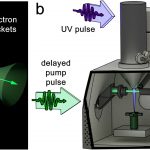 Almost a century ago, magnetic lenses were first incorporated into an electron microscope(1). Since then, electron microscopy has advanced from barely surpassing the optical diffraction limit(2) to employing aberration corrected lenses that resolve features smaller than fifty picometers(3), close to the Bohr radius of a hydrogen atom. These extraordinary gains in precision, stability, and versatility
 In a groundbreaking advance that could reshape the future of industrial microbiology and biotechnological processes, researchers at the Institute of Physical Chemistry of the Polish Academy of Sciences have engineered an innovative nanoparticle-based method for precisely disarming bacteriophages—viruses notorious for their destructive impact on beneficial bacterial cultures. This selective antiviral technology harnesses the power of
 Funmi Ogundare A professor of Microbiology at Babcock University, Ilisan-Remo, in Ogun State, Ayandiran Aina, has called for the adoption of eco-friendly, sustainable approaches to developing agricultural pesticides, improving crop yields, and advancing cancer treatment, as global concerns over food security, public health, and environmental pollution intensify. Aina, who stated this while delivering the university’s